 Camp
Camp
Yosemite Winter Camping: What a 40°F Bag Taught Me
Yosemite winter camping — five December days, one 40°F bag: real cold-weather gear lessons and what a check caught before the freeze.

Affiliate Disclosure: This post may contain affiliate links. As an Amazon Associate, CampMate earns from qualifying purchases — at no extra cost to you.
Here's the situation I walked into. Five days. Yosemite. December. Night temperatures in the 20s, sometimes down into the teens. I have a 30°F sleeping bag. A different friend this time — my usual weekend partner wasn't free, so I asked someone new — and she's never winter camped, has a 40°F bag, no real sleeping pad, and zero cold-weather clothes. She runs cold even in her own living room.
Read that again. A 40°F bag on a 20°F night. No pad between her and the frozen ground. No jacket to sit still in when the sun drops and the cold climbs up through the picnic table.
That is not a gear question. That is a safety question. And it's mine to answer, because I'm the one bringing her into the mountains in December. She trusts me. That trust is the whole reason I can't just shrug and say "we'll be fine."
So I opened CampMate and said it plainly. Five days. One 30°F bag. One first-timer. What am I looking at?
The honest answer
It did not sugarcoat it. A 40°F bag on a 20°F night — my friend's bag — was the weak link, the one thing in her kit that could actually hurt her. Not "uncomfortable." Not "a little chilly." A genuine safety gap, the kind you don't feel coming until you're too cold to think straight. And she had no pad under her, and zero cold-weather clothes.
Even my side of the tent was thinner than I'd assumed — a 30°F bag on a 20°F night is doable, but marginal, the kind of margin you don't want to be relying on at 3 AM. I'd been framing the whole thing as "we need to grab a few warm things," and the AI reframed it around safety: her 40°F bag was the weak link, and this was about not letting a first-time winter camper spend 20°F nights under-prepared.
That reframing mattered. Because I'd been about to shop like I was planning my own trip — my preferences, my budget, my comfort. But the person I was actually responsible for had different needs and a $150 budget, and I needed to solve for her, not for me.
That's the part people miss about winter camping. The math doesn't care how tough you are. At 3 AM, when your core temperature is dropping, nobody's doing hypothermia math. You either planned for it beforehand, or you didn't. And "planning" means something very specific: bags that actually match the temperature, and pads that keep the cold ground out.
Weight doesn't matter. Sleeping does.
Then it broke a habit I didn't know I had.
I've spent my whole backpacking life optimizing weight. Lighter this, fewer grams that. It's muscle memory at this point. So when I started looking at winter bags, I was automatically reaching for the lightest one — because that's what I always do.
I caught myself mid-thought: wait, this is car camping. We're not carrying any of it. Weight doesn't matter here — staying warm does. I said it out loud to CampMate, half-expecting to be corrected, and it just agreed, flat out: right, weight is irrelevant, warmth is the whole game.
It sounds obvious. It wasn't, to me. I was about to buy the lightest winter bag I could find, out of pure habit, and it would've been the wrong bag. The heavy, warm bag — the one I'd have skipped over — was the right answer, because I was driving it to the campsite, not strapping it to my back.
The two hundred dollars I didn't spend
And then it caught me — the moment I trusted it completely.
I was reaching for a $200 winter bag for myself, out of the same reflex that had me chasing the lightest option. And it talked me down with a single line of honest math: your 30°F bag plus a liner gets you through 20°F nights. You don't need a new bag. You need a twenty-dollar fix.
Twenty dollars. I'd walked in ready to spend two hundred, and the answer was a liner I could shove in my existing bag — an Outdoor Vitals liner, $19.98, that adds roughly ten degrees. My Rapide SL pad at R-4.8 was already warm underneath, so I didn't need a new pad either. The cheap fix was the right fix, and I'd have missed it if I'd shopped the way I always do.
What we actually bought
The gap wasn't my pad. The gap was my friend's entire setup — her sleep, and the part I almost forgot: she had nothing to wear.
For her sleep: a Duraton 20°F mummy bag, $69.98, and a Gear Doctors Oxylus R-4.3 insulated pad, $49.99. Real gear, not a "32°F" trap bag that would have left her shivering and swearing off camping forever. That's her whole sleep kit, $30 under the $150 she'd told me she could spend.
For me: a liner, $19.98, to stretch my 30°F bag down another few degrees. I kept my tent. Kept my Rapide SL. Kept my bag.
And then the thing I'd have missed. Five days means long, cold evenings sitting still around camp — and she owns zero cold-weather clothes. I wasn't about to let her freeze at the picnic table while the rest of us were fine. So we added a down jacket for her: an Orolay, $79.99. For someone who runs cold, the extra twenty over the cheaper one pays for itself the first hour she's not moving.
Her $150 covered her sleep kit. I covered the liner and the jacket. Total: $219.94 — and nobody had to go over their ceiling to stay warm.
Yosemite winter camping checklist
If you're planning winter camping in Yosemite (or anywhere with nights in the 20s), here's the real checklist from someone who planned it wrong the first time: a bag that actually matches the temperature (not one that claims to), a pad with an R-value high enough to block the frozen ground, a warm layer for sitting still around camp, and a liner if your bag is marginal. Those four things — not a $200 new bag, not a new tent — are the winter camping essentials that keep you safe. The whole point is that a 40°F bag on a 20°F night is a risk, and the fix is cheaper than you'd think.
Related read: how I planned the summer trip.
The gear
| Gear | Who | Price |
|---|---|---|
| Duraton 20°F mummy bag | Friend (sleep) | $69.98 |
| Gear Doctors Oxylus R-4.3 pad | Friend (sleep) | $49.99 |
| Orolay down jacket | Friend (staying warm) | $79.99 |
| Outdoor Vitals liner | Me (boosts 30°F bag) | $19.98 |
| Big Agnes Rapide SL pad (R-4.8) | Me (reuse) | — |
| Total spent | $219.94 |
The forecast it wouldn't fake
The weather was its own honesty test. December is far enough out that no forecast is real, and it said so instead of inventing one. It told me to re-check three days before we left, and it spent its energy where it actually mattered: the night temperatures in that canyon at that time of year, and the way the low 20s feel different when you're standing in them than when you read them on a screen. It didn't give me a fake 10-day forecast. It gave me the numbers I could plan around, and the honest caveat that I'd confirm them later. For a trip where the entire risk was temperature, that mattered more than any gear list.
The trip
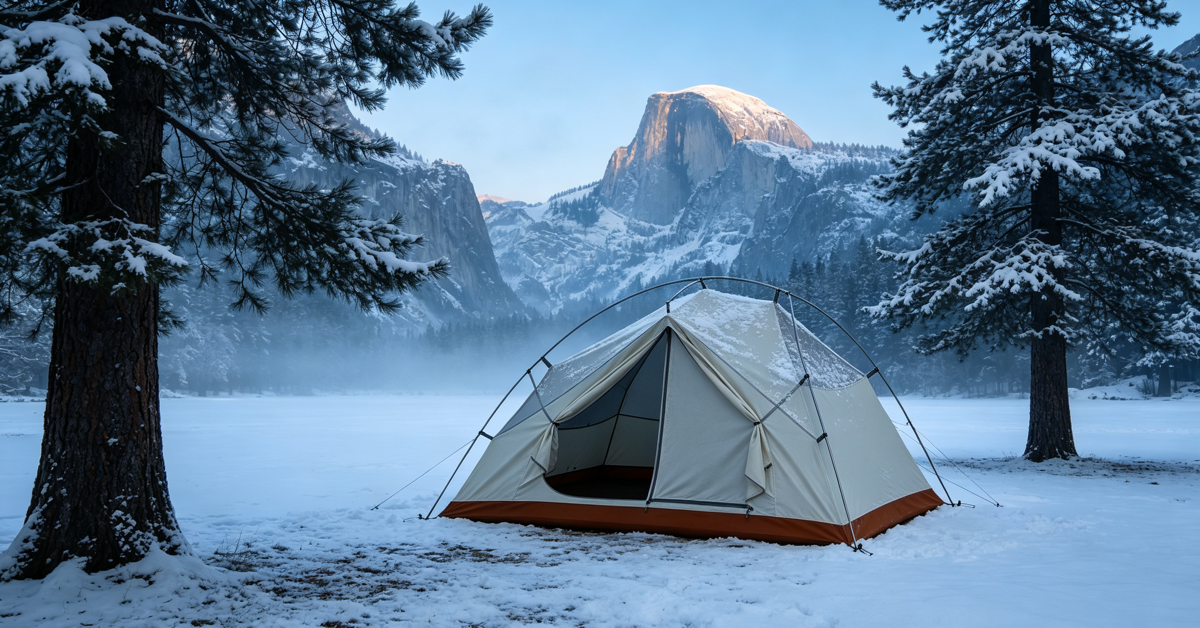
We went. It hit 22°F and the ground frosted over white.
My friend climbed into a bag that actually matched the temperature, on a pad that kept the frozen ground out, and she slept through the night. She had a real jacket for the long cold evenings instead of whatever thin thing she'd have shown up in. She slept through the night, warm, and didn't have to be tough about any of it. Which is the whole point. She didn't have to do hypothermia math at 3 AM, because I did it beforehand.
I don't do hypothermia math at 3 AM — and neither does she. That's the line I kept thinking on the drive home.
When you're bringing someone into the cold, the planning is the care. You don't wait until you're both shivering to figure out it was never about the tent or the weight or the brand. It was always about whether the person next to you was warm, and whether you'd done the work to make sure of it.
The total was $219.94. I'd walked in with a $600 budget and a vague sense that winter meant buying everything new. The honest answer was a twenty-dollar liner for me and a real sleep kit plus a jacket for her, and everyone slept. Winter doesn't ask you to spend more. It asks you to think first.
I sent the feedback to CampMate on the way back. Five days, one first-timer, zero frozen nights. I'll call that a win. And I'll do it again next winter, same responsibility, better prepared.
This is a real conversation with CampMate. Gear picks, budgets, and outcomes are all real. See the full conversation →