 Camp
Camp
How to Stay Warm While Camping: The Sleeping Bag Fix
How to stay warm while camping — the sleeping bag fix: ratings explained, the pad combo that matters, and a real $318 setup.

Affiliate Disclosure: This post may contain affiliate links. As an Amazon Associate, CampMate earns from qualifying purchases — at no extra cost to you.
I thought I'd learned my lesson. I'd camped once — Silver Falls, s'mores, the whole thing — and I'd driven home feeling like a person who camps now. I told people at work about it. I left my tent in the trunk like a badge.
Then October rolled around, and my friend said "let's go back," and I remembered the night I froze.
I didn't want to remember it. I wanted to be the confident second-timer. But the memory was there, and it was specific: 3 AM, waking up cold in my sleeping bag, shivering, pulling my hoodie closer in the dark. I'd zipped everything shut, and none of it mattered. The cold had crept in from the ground and the damp air, and I lay there telling myself the morning would come.
So I opened CampMate with my second-trip confidence and announced, very confidently, that I knew exactly what was wrong: my tent.
The wrong fix
Here's the embarrassing part, and I'm telling you because someone else is about to do the same thing. My tent is a Featherstone Granite 2, and some forum somewhere had called it "heavy," and in my head "heavy" had mutated into "this is why I was cold." I'd decided the tent was the problem without ever actually checking.
So I typed out my whole situation with that particular second-time energy where you use words you only half understand, to make it sound like you know more than you do. I told CampMate I had a Featherstone Granite 2 tent, a Coleman Dunnock 20°F sleeping bag, a Therm-a-Rest Trail Scout pad, a Foxelli headlamp, a Coleman BottleTop stove. I told it I'd frozen. And I told it I was going to buy a new, lighter, better tent.
It read the list back, and then — gently, which somehow made it worse — it said no. The tent wasn't what was making me cold. It was the sleeping bag.
And then it taught me the thing that genuinely rearranged my brain, and I'm going to put it in bold so you don't miss it the way I did: the "20°F" on my Coleman Dunnock is a limit rating, not a comfort rating. It's the temperature where you'll technically survive the night. Not the temperature where you'll be comfortable. Those are two completely different numbers, and nobody — not the box, not the product page — tells you which one you're looking at.
I'd been walking around thinking I had a "20-degree bag." I'd frozen that first night because, in comfort terms, my bag was nowhere near 20 degrees. I sat there feeling stupid for a second. Then I felt something better: relief. Because the fix wasn't a new tent — which would've cost $200 or more and still left me cold. It was a sleeping bag, and I got to keep the tent I already had. That was the whole answer to staying warm while camping: one warm thing that actually matched the night, not a bigger tent.
What I actually bought
It walked me through the upgrade. The Kelty Cosmic 20 down bag, $189.95 — and this one has an actual, honest comfort rating, so "20" finally means something real. It explained the down fill, why this temperature number wasn't lying the way the last one had, and — this part I appreciated — why keeping my existing tent was completely fine. I didn't need to spend a dollar on the tent I'd come in ready to replace.

Then it did something I didn't expect. I'd mentioned, almost as an afterthought, that I'd also been cold around camp — sitting by the fire after dark, shoulders freezing, before I ever got into the bag. It took that seriously. It searched, and the right thing wasn't even in its catalog, and it told me that straight up: this one's outside what I can sell you, but here's what you want. A REI Co-op 650 Down jacket, $129. It even pulled up a review to back up the recommendation, then just said go get it.
Total: about $318 — a hair under the $350 I'd set aside, and I got to keep my tent. Two things that had actually made me miserable, fixed. The thing I'd been certain I needed — a brand new tent — turned out to be the one thing I should keep.
The gear
| Gear | Decision | Price |
|---|---|---|
| Kelty Cosmic 20 down sleeping bag | ✅ Bought | $189.95 |
| REI Co-op 650 Down jacket | ✅ Bought (outside catalog) | $129 |
| Featherstone Granite 2 tent | Keep | — |
| Therm-a-Rest Trail Scout pad | Keep | — |
| Total spent | ≈$318 |
The budget math
The whole fix came to $318 — but the part that actually kept me warm was $190 of it, and the jacket was $129. Strip out the jacket and the core problem — a sleeping bag that actually matched the temperature — got solved for under $200. That's the honest version of "budget camping gear": you don't need a cheap everything, you need the one warm thing that matters and the discipline to spend on it. Most beginner gear lists push you toward $500 of mediocre stuff; the real budget play is to find the $200 that fixes your actual problem.
Related read: here's the trip where it all started — and the next one, first backpacking.
The honest forecast
A couple more things worth naming, because they're the kind of small honesty that builds trust. When I asked about the forecast for my October dates, it didn't invent a number to sound authoritative. It told me it couldn't forecast that far out, and to re-check three days before I left. I've used apps that would've shown me a fake 10-day forecast with total confidence; this one just said, 'I can't see that far, check again closer to the date.' And after it had talked me into the right gear, it wrote the whole thing up into a proper Silver Falls gear list I could keep — not just a wall of chat, an actual document. It admitted what it couldn't do, and it handed me a record of what we'd decided. Both of those things mattered more than I expected.
The trip
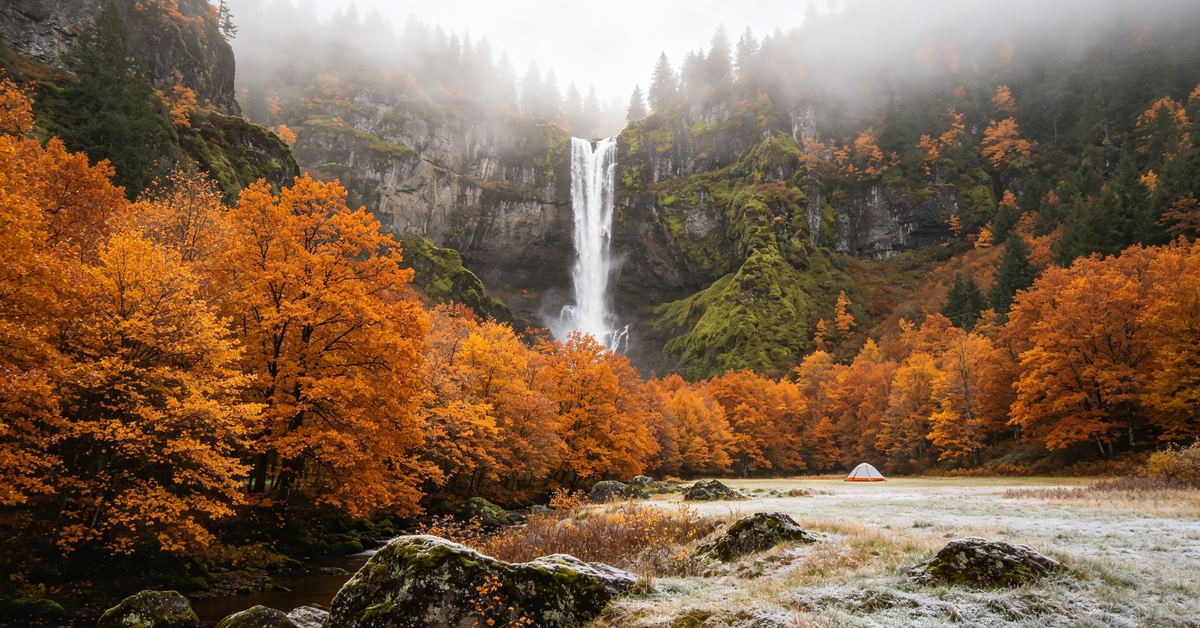
We went back in October. The trees were orange and gold, the air had that sharp fall bite, and somewhere in my gut was the memory of waking up cold at 3 AM.
It got cold that night. Forty degrees, damp from the canyon, the kind of cold that seeps into everything and doesn't leave. I put on the down jacket around the fire, and for the first time, sitting outside after dark, I was warm. Not "managing." Warm. Then I climbed into the Kelty, and I slept. Through the whole night. Not once did I wake up shivering, checking the time, counting down to dawn.
I remember lying there at some point and thinking, it was the bag. It was the bag the whole time. I'd been ready to buy a whole new tent — ready to spend more money and still be cold — and the answer had been a $190 sleeping bag and a jacket.
The next morning I opened CampMate on my phone and told it the trip had gone well. It offered to send my feedback to the team, and this time I did it right then — told them the Kelty and the REI jacket had carried me through a 40-degree night with zero freezing, and that my old bag — not the tent — had been the problem all along. Because the thing had genuinely earned it, and because I wanted whoever built it to know that the "limit vs. comfort rating" explanation had saved me from the exact mistake I'd walked in ready to make.
That one night changed my whole gear list — not by adding a bunch of new stuff, but by fixing the one thing that actually mattered, and talking me out of the thing that didn't. Turns out you don't need a better tent when the problem was never the tent — and if you're figuring out how to stay warm while camping, that's the first thing to check.
This is a real conversation with CampMate. Gear picks, budgets, and outcomes are all real. See the full conversation →