 Camp
Camp
First Backpacking Trip Gear: What You Really Need
First backpacking trip gear — a starter list that avoids the $600 mistake: what you actually need for your first overnight.

Affiliate Disclosure: This post may contain affiliate links. As an Amazon Associate, CampMate earns from qualifying purchases — at no extra cost to you.
I've now car-camped twice — Silver Falls in summer, then again in October. I have gear I actually trust: a Featherstone Granite 2 tent, a Kelty Cosmic 20 sleeping bag that fixed my freezing problem, a Therm-a-Rest Trail Scout pad, a Coleman BottleTop stove, a headlamp, a down jacket. I'd graduated from "person who has never camped" to "person with an actual, working gear list."
So, naturally, I decided it was time to ruin my confidence by trying backpacking.
Eagle Creek. Thirteen miles, one night. It's basically the Portland first-backpacking-trip starter pack — I've read about it for weeks, stared at photos of the falls, imagined myself being the kind of person who carries their house on their back. And that's exactly where I got myself into trouble: I'd done way, way too much reading before I'd done any actual walking.
The spiral
I opened CampMate and laid out my whole situation, every piece of gear I'd accumulated, and the honest question I was actually asking underneath all the bravado: "can I really carry all this thirteen miles, or do I need to replace all of it before I even try?"
And then — because I am me, and I cannot do anything without first doing it wrong on the internet — I'd already gone down the Reddit hole. One camp said "just rent everything, don't buy." Another camp said "if you don't go ultralight your knees will never forgive you." I had tabs open for a lightweight tent, a lighter sleeping bag, probably a new everything. In my head I'd already spent six hundred dollars on gear I'd only ever read about, and I hadn't even picked a date.
I was, in short, spiraling. Over a thirteen-mile overnight.
This is where CampMate did the thing that genuinely stopped me.
Don't buy new gear. Walk first.
It read my gear list and said, basically: you already have a tent, a sleeping bag, a pad, a stove, a light. You don't need new gear. You need a backpack. That's it.
I think I actually said something like "but what about going ultralight?" And it walked me through the actual weight math — the honest, boring version, not the Reddit version. Yes, my car-camping tent is heavier than a fancy ultralight one. No, that does not mean it's going to destroy me on a single thirteen-mile overnight. The thing that was actually, concretely missing was a pack to put it all in.
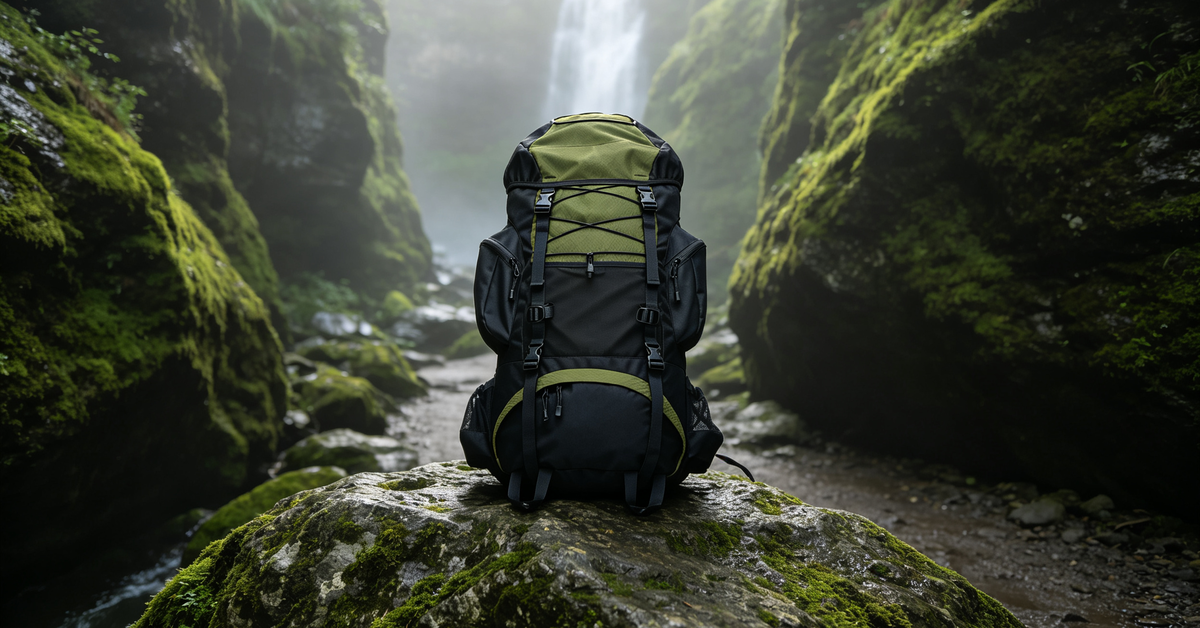
So it searched, and compared. It laid out the options honestly: budget packs around $50, and internal-frame packs around $80 that carry the weight better over thirteen miles. It made the frame case concrete — a load-bearing frame makes the miles noticeably easier on your back — and it pointed me at the TETON 55L Scout at $99.99, a bit over that $80 mark but the intro-pack gold standard: nearly 8,000 reviews at 4.7 stars, a ventilated mesh back, and a torso that actually adjusts to fit me.
The alternatives were laid out in numbers I could actually weigh: an IGOLUMON 60L at $45.99, a Loowoko 50L at $49.99, an Amazon Basics 75L at $79.35, a TRIPOLE 65L at $80.21. The part of me that hates spending money perked up at the $46 bag. But the AI was straight about the tradeoff: the cheap packs are frameless, and the 75L Amazon Basics has more room for my bulky tent but less of a track record than the Teton. It wasn't pushing me to the cheapest thing or the biggest thing — it laid out what each one actually got me and let me pick. I went with the Teton.
One purchase. Ninety-nine dollars. Everything else stayed in my closet, right where it already was.
The honest part
Then it did something I've come to really like about this thing, and it's why I keep coming back.
I'd mentioned the trip was "next spring," and it actually went and looked at whether the trail would even be open. What it found changed my whole plan: Eagle Creek took real storm damage back in December, and it was still listed as closed — crews hoping to reopen by spring, nothing guaranteed. It didn't tell me what I wanted to hear. It told me March or April was a real risk, and to push to May or June, when the trail would likely be back and the waterfalls at their best.
For the trail itself, it kept digging. The gradual grade rather than a brutal climb, the cables section that looks scary but isn't. And when it tried to pull up the Forest Service page and the page wouldn't load, it told me that straight up — "the page is unreachable, here's what the search results already confirmed" — instead of pretending it had loaded. That kind of honesty — "here's what I found, here's what I couldn't" — is the exact opposite of the Reddit thread that had me spiraling.
Reddit gave me forty confident opinions and a headache. CampMate gave me one clear answer and an honest "here's what I don't know yet."
First backpacking trip gear checklist
If you're planning your first backpacking trip and wondering what you actually need to carry, here's the honest checklist from someone who almost bought $600 of new stuff and didn't need any of it: your existing tent (if it fits), your sleeping bag and pad, a stove and one pot, a headlamp, water, and one new thing — a pack that fits. The gear checklist for a first overnight is shorter than you think, and the pack is the only real purchase. Mine was the TETON Scout 55L.
Related read: the gear list from my first-ever camping trip.
The gear
| Gear | Decision | Price |
|---|---|---|
| TETON Scout 55L backpack | ✅ Bought | $99.99 |
| Featherstone Granite 2 tent | Keep (carry it) | — |
| Kelty Cosmic 20 sleeping bag | Keep | — |
| Therm-a-Rest Trail Scout pad | Keep | — |
| Coleman BottleTop stove | Keep | — |
| Total spent | $99.99 |
The trip
I'll be honest — I was scared the night before. I'd packed and repacked the Teton three times, convinced it was somehow going to be terrible, that I'd made some catastrophic packing mistake, that thirteen miles would break me.
It didn't. Thirteen miles went by, and it wasn't the nightmare I'd built in my head. My tent was heavier than the ultralight one I'd almost impulse-bought, and it was fine. My sleeping bag was fine. My knees were fine. The thing that had scared me — the chorus of "you must go ultralight or suffer" — turned out to be, at least for a thirteen-mile overnight, mostly Reddit talking.
And here's the best part, the thing I didn't see coming. Because I hadn't blown $600 on gear I didn't need yet, I finished the trip actually knowing what to upgrade. I could feel it, mile by mile — where the weight sat, what I'd want to swap if I went longer. I'm already planning a second backpacking trip for July, and now I know exactly what to change. Because I walked first and bought later.
So here's what I'd tell the version of me with her six open tabs and her $600 of imaginary purchases: don't buy new gear before your first backpacking trip. Buy the pack. Walk the miles. Let the trail tell you what's actually wrong. It's cheaper, and honestly, a lot more fun than being right on Reddit.
I walked out having spent $99.99 instead of the $600 I'd mentally committed before I'd even picked a date. The other five hundred dollars is now sitting in a fund for the July trip — the one I'll pack for with actual experience instead of a Reddit thread.
This is a real conversation with CampMate. Gear picks, budgets, and outcomes are all real. See the full conversation →