 Camp
Camp
Best Sleeping Pads for Kids Camping: Family-Tested
Best sleeping pads for kids camping — family-tested picks for restless sleepers: what to upgrade first and what to skip.

Affiliate Disclosure: This post may contain affiliate links. As an Amazon Associate, CampMate earns from qualifying purchases — at no extra cost to you.
The kids staged a mutiny.
We'd done Yellowstone. It went well — we came in basically on budget, saw the bison, survived the bear anxiety with my heart mostly intact. I thought we were officially a camping family now. I'd let myself believe the hard part was over.
Then on Tuesday, my six-year-old looked up from her cereal and announced, in that matter-of-fact way kids have when they're delivering a verdict they've clearly been sitting on: "if we have to sleep on the ground again, I'm not going."
And just like that, I was back in planning mode, staring down the same feeling I always get. It's not just a gear question. It's: if I screw this up, it's not a bad trip — it's my wife looking at me across a cold tent, and the kids deciding, collectively and permanently, that camping is a thing they used to do.
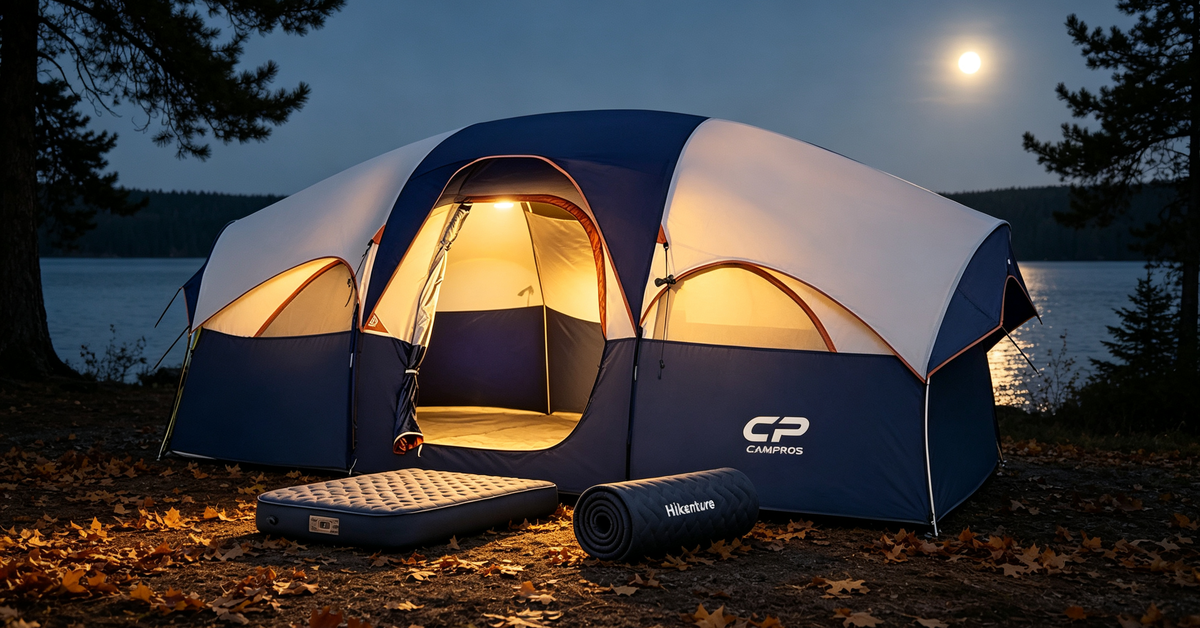
So I opened CampMate and told it the truth, all of it. We have the gear from Yellowstone — the CAMPROS tent, the Kelty and Underwood bags, the Gear Doctors pads, the Coleman stove and Odoland cookware, the UDAP canister. But now we're headed to Lake Tahoe, where the nights drop a lot colder than Yellowstone did. The kids complained about sleeping on the ground, and I was about to do what I always do when a kid complains: throw money at the problem and replace all five pads.
That's where it stopped me.
Who slept worst?
It didn't let me buy five of the same pads. It asked a couple of questions first — how many kids, how cold the nights would run — and somewhere in answering them I hit the question I hadn't asked myself: who actually slept worst last time?
That's not a question I'd asked myself. I'd been about to replace everything, because that's the dad instinct — everyone gets the same upgrade, nobody feels left out, problem solved. But when I actually stopped and answered the question, the answer wasn't "everyone." The answer was the kids. And the reason nobody'd frozen in Yellowstone was at least partly that all three of them crammed into one double bag, trading body heat back and forth — that Underwood is a warm-weather bag, and the only thing that'd been carrying them through cold nights was each other and the ground doing less damage than it could've.
The three of them, on the thinner pads, tossing and turning, complaining about the hard ground. My wife and I were fine. Adults can tough out a hard night and call it "part of the experience." Kids can't. They just remember that it hurt, and they vote with their feet next time. My six-year-old had literally just announced her vote over breakfast.
Then it taught me the thing I'd had completely backwards: it's not the thickness of the pad that keeps you warm, it's the R-value. Our old pads were Gear Doctors R-4.3 — fine for Yellowstone's summer nights. But Tahoe nights run around 38°F, and that changes the math. R-4.3 wasn't going to cut it. The fix wasn't "thicker and fancier for everyone." The fix was "a real R-value upgrade for the people who actually need it — and a real thick pad for the kids who complained about the ground."
Upgrade the people, not the pile
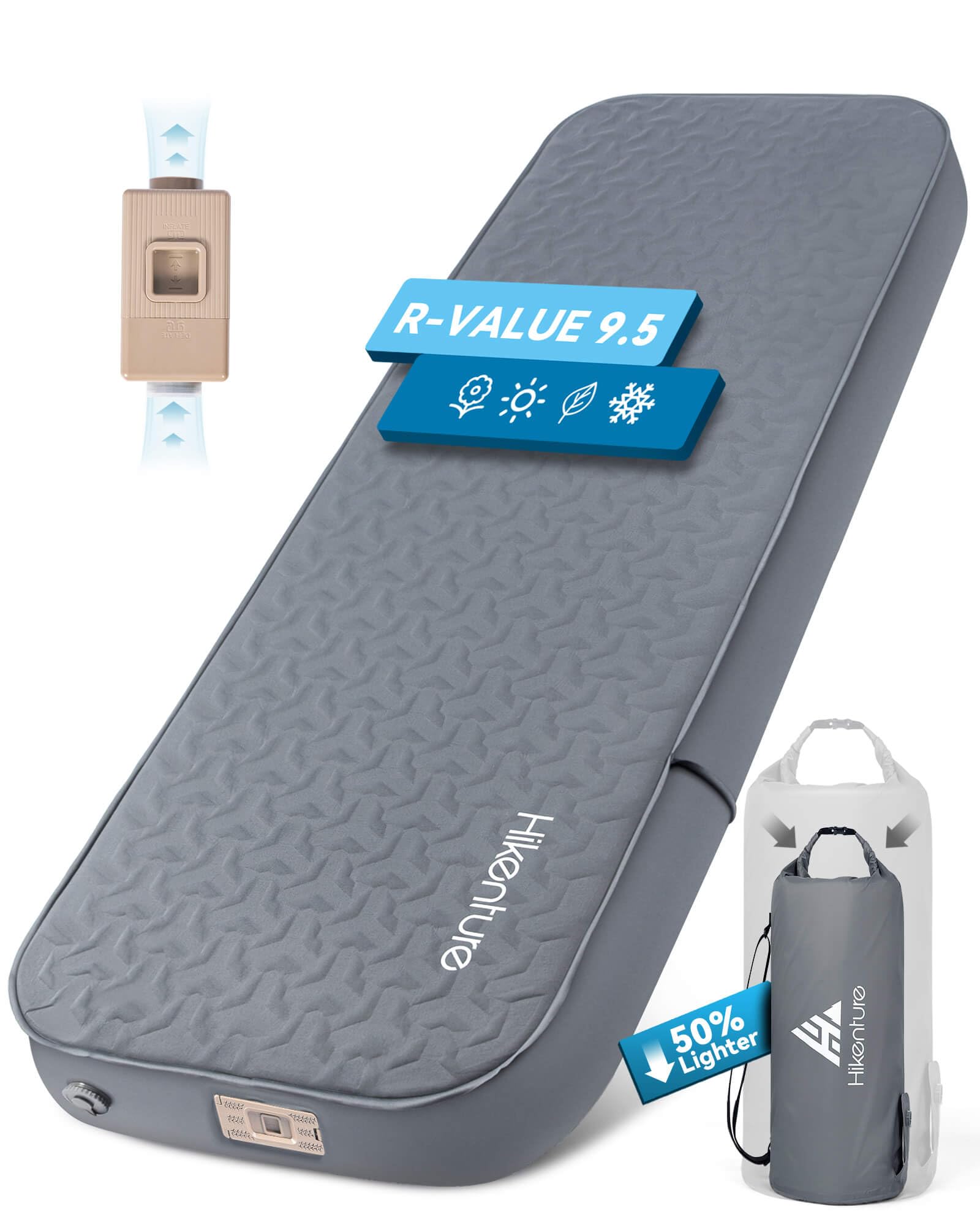
So the plan flipped. Instead of five matching upgrades, it was targeted. The three kids got the thick, warm one — a Hikenture 4-inch self-inflating pad, R-9.5, $94.98 each. Thick enough that the hard ground stops being the thing they remember, and warm enough for a 38°F night. My wife and I kept it simpler — an Elegear pad, R-9.5, $67.99 each.
Do the math and you'll see why this was the right call. Spraying all five of us with the good pads would've chewed through most of the $800 I'd set aside. Instead, three kids get the thick pads and the two adults get the budget one, and the total came to $420.92 — spent exactly where it mattered, on the three people who were actually miserable. That left $379 over, and it went straight into gas and s'mores.
The cart even handled the three-and-two split for me. I bumped the Hikenture to three and the Elegear to two, and it read the whole thing back — five pads, exactly as planned, and the numbers matched the trip document. No guessing, no recounting, no fumbling. That's the kind of small, honest thing that would've cost me an hour of confusion later if it'd been left to me to hold in my head.
It also showed me how not to overcorrect. Once you start researching pads, the temptation is to buy the warmest thing on the shelf and call it a day. But the point wasn't "the most R-value money can buy." The point was "more than the R-4.3 they had, enough for Tahoe." Both pads land at R-9.5, which clears the bar without me paying for a number I don't need. Same trap as before, different aisle: when I get scared, I want to buy the most instead of the right amount. It kept pulling me back to the actual question — who's cold, and how cold — instead of letting me solve a $800 problem I didn't actually have.
Why the Hikenture for the kids
If you're shopping for a sleeping pad specifically for kids camping, the short version: thickness beats everything for kids who complain about the ground, and R-value beats thickness for staying warm. The Hikenture 4-inch self-inflating pad (R-9.5, $94.98) is the pick because it fixes both — thick enough that the hard ground stops being the thing they remember, warm enough for a 38°F night. The cheaper pads we started with were R-4.3 and thin; the kids still felt every rock. Compare that to the adult Elegear at R-9.5 and $67.99 — a genuine upgrade for the people who actually needed it, not a five-of-the-same splurge.
Related read: the trip that started all this.
The gear
| Gear | Who | R-value | Price |
|---|---|---|---|
| Hikenture 4" self-inflating pad | 3 kids | 9.5 | $94.98 each |
| Elegear memory-foam pillow pad | 2 adults | 9.5 | $67.99 each |
| Total | $420.92 |
The trip
We went to Tahoe at the end of August, when the nights got cold, and here's the thing — nobody complained. Not once. Not a single "my back hurts" or "the ground is hard" or "when do we go home."
The kids slept on their thick pads and woke up warm, and my six-year-old — the one who'd declared she wasn't going — asked if we could stay an extra night. That's the entire review, right there, in one sentence. The mutiny ended because I stopped treating it like a "we need nicer camping stuff" problem and started treating it like what it actually was: three kids who slept badly, and a question about who to fix first.
The whole upgrade came down to one question I finally asked myself — who slept worst? — and the answer fixed the actual problem instead of spraying money at all five of us. I didn't buy a nicer camping trip. I bought the kid who was ready to quit a reason to stay.
The whole thing cost $420.92 with $379 left over for the things that actually make a family trip good — and it fixed the real problem instead of just spending the money. That's the part I'll remember next time I feel the dad reflex to throw cash at a complaint: ask who's actually hurting first.
I sent the feedback on the drive home. Second trip, zero mutinies. If that's not progress, I don't know what is.
This is a real conversation with CampMate. Gear picks, budgets, and outcomes are all real. See the full conversation →