 Camp
Camp
Grand Tetons Family Camping: What Gear We Reused
Grand Tetons family camping — a gear plan that reuses what you own: the 20% you actually need for the Tetons.

Affiliate Disclosure: This post may contain affiliate links. As an Amazon Associate, CampMate earns from qualifying purchases — at no extra cost to you.
This is our third family camping trip, and the first time I almost talked myself into wasting three hundred dollars.
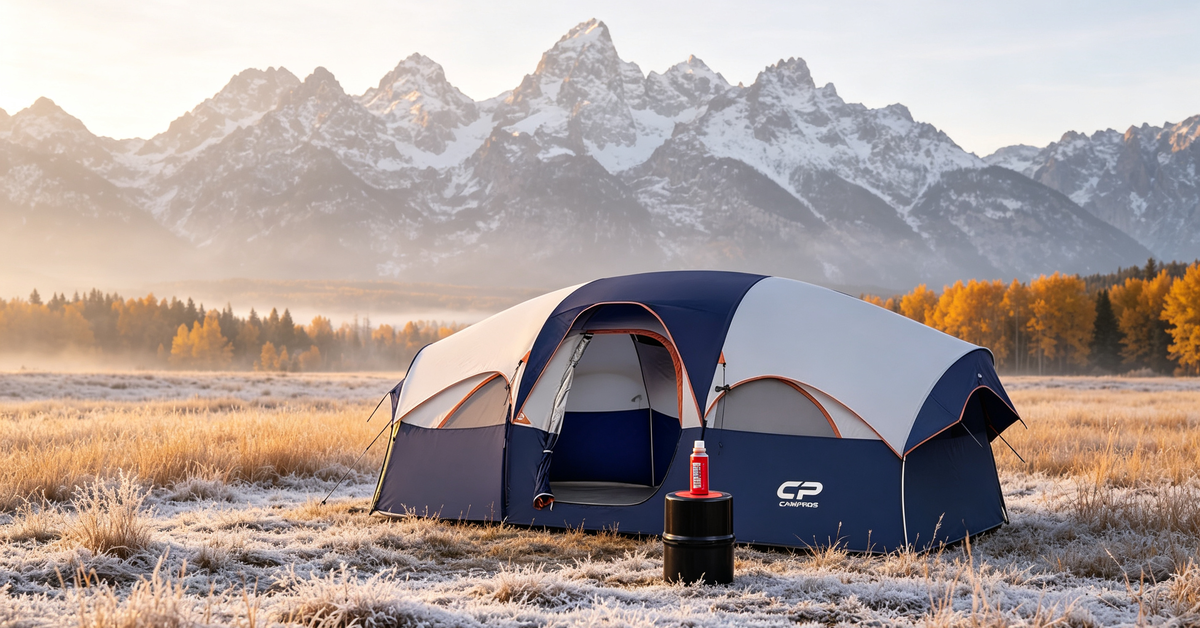
We'd done Yellowstone, then a fall trip where I'd upgraded the kids' sleeping pads. We have real gear now. A CAMPROS eight-person tent. A Kelty double bag for me and my wife, and an Underwood double bag the three kids share. The Hikenture pads I got the kids on the Tahoe trip, the Elegear pads for us adults, the UDAP bear canister, the Coleman stove, the Odoland cook set. We're not starting from scratch anymore, which should be a good feeling.
So when we set our sights on the Grand Tetons for late September, I opened CampMate with the full list and a knot in my stomach. Because here's the thing about the Tetons: they're higher, they're colder, and they're grizzly country. And my gut — the same gut that's kept my family safe through two trips — was telling me, loud and clear, that I needed to buy a bunch of new stuff before I'd even looked at what I already owned.
I was about to spend $300 on 0° bags for everyone and a heavier tent. Purely because this trip felt scarier than the last one. That's the trap, and I walked right up to the edge of it.
The audit
I listed everything I owned and said, basically: tell me what to buy, because I don't want to underpack for grizzlies and a cold night. I'd rather overspend than underprepare. You know how it is.
It went through my list, item by item, and told me the truth I did not want to hear: my gut was half right and half wrong, and it mattered a lot which half was which.
The tent. Fine. The stove. Fine. The cook set. Fine. The pads I'd bought this fall for the cold nights — fine, because that's exactly what that upgrade was for. And the bear canister — this is where I really would've embarrassed myself. I was ready to buy a new one, because grizzlies felt like a different animal from Yellowstone's bears, and surely a bigger bear needs a better canister, right? It looked it up, and pointed out the thing I'd never fully understood: my UDAP canister is already IGBC certified — the exact standard the Tetons require. I didn't need a new canister. I needed to check a stamp that was already on the thing sitting in my garage.
I'd almost spent money on a problem I didn't have. That's the part I almost missed.
The one thing I actually did need
And then it caught the thing I would have missed, which is the part I'm most grateful for.
The kids' sleeping bag. I'd assumed it was fine, because it's a sleeping bag and sleeping bags are all the same, right? Wrong. The Underwood double the three kids share is a warm-weather bag — listed at 16 to 30 degrees Celsius, which is about 60 to 86 degrees Fahrenheit. Perfect for an August night in Yellowstone. Useless for a 20-degree September night in the Tetons.
Here's the thought I didn't say out loud, because I didn't want to admit it: I'd been so worried about the scary gaps — the grizzly, the altitude, the cold that I could feel in my chest when I thought about it — that I'd missed the one gap that was actually sitting in my own garage. A warm-weather kids' bag on a freezing night. That's how you get a kid who never wants to camp again.
So the fix wasn't "buy a bunch of new stuff." It was one thing, done right: three real three-season mummy bags for the kids, the Northroad, $37.99 each, rated 14 to 59°F with a recommended 32°F limit. And a couple of proper headlamps for me and my wife, a Nitecore NU25 each, so we weren't fumbling around the tent with phone flashlights. Two items in the cart, five pieces total, $187.87.
You already have 80% of this. It said it plainly, and it was the most valuable sentence of the whole trip — not because it saved me money, but because it pointed at the other 20% and said, this is the part that matters, and it isn't the part you were scared of.
The 20% that actually mattered
The rest of the real gaps were small, and some of them weren't even things it could sell me.
Bear spray. It told me straight up: this isn't in my catalog, and I'm not going to pretend it is. Here's what to look for — EPA-registered, 2 percent capsaicin, at least 7.6 ounces. Two cans, one for each adult, because the kids stay behind us. That's a safety item and a set of specs, not a product link. I respected that honesty.
Stakes and guylines. Real stakes, because the Tetons get real wind and the stakes that come with the tent are the one genuine weak point. Also outside its catalog, and it said so instead of trying to sell me something close.
The rest was even smaller: sunscreen, lip balm. I asked whether sunscreen was another "you already have it" item, and it said the UV at that elevation is the kind you don't feel until it's too late. The sunscreen made the list because I asked and it answered straight — which is the thing a tool does when it's actually thinking about you, not just about selling you something.
It also did the homework I'd have had to do myself, in real time. The National Park Service rules for the Tetons. The IGBC certification standard and what the stamp actually means. The specific food-storage rules at the campground we were booking. I'd have spent an evening piecing that together from forum posts and official PDFs, and it just handed me the sources and the summary.
Reuse vs. buy
| Gear | Decision |
|---|---|
| CAMPROS 8P tent | Reuse |
| Kelty Tru.Comfort 20° double (adults) | Reuse |
| Hikenture 4" pads ×3 + Elegear ×2 | Reuse |
| UDAP bear canister | Reuse (IGBC certified, check stamp) |
| Coleman 1-Burner + Odoland 16pc | Reuse |
| Underwood double (kids) | Replace — warm-weather bag (16–30°C) |
| Northroad mummy ×3 | Buy (kids, $113.97) |
| Nitecore NU25 ×2 | Buy (headlamps, $73.90) |
| Bear spray ×2 | Buy (outside catalog) |
| Stakes + guylines + sunscreen | Buy (outside catalog) |
Bear spray vs bear canister: do you need both?
Short answer: in grizzly country, yes. They do different jobs. The bear canister (our UDAP, IGBC-certified) protects food when you're away from it — the ranger checked ours and the stamp passed. Bear spray protects people in the moment — it's the last line if a bear doesn't back down. For Grand Tetons grizzly country, carrying both isn't paranoid; it's the standard setup. The spray we bought was EPA-registered, 2% capsaicin, at least 7.6 ounces — one can per adult. If you're only going to carry one, carry the canister for food safety, but honestly you want both with kids in the backcountry.
Related read: our Yellowstone trip that got us all this gear.
The trip
We went, and the list held up. We passed a grizzly by the side of the road — forty yards out, far enough but close enough that I was very glad the bear spray was on my hip instead of in a shopping cart somewhere. The kids slept warm on a 22-degree night in bags that actually matched the temperature — and let me tell you, there is no dollar figure on watching your kids wake up rested instead of frozen. The canister's IGBC stamp got us through the ranger's storage check, no problem. The stakes held in the wind that rolled through at night. And the sunscreen turned out to be exactly as important as it said it would be.
The $300 I almost spent? We used it on steaks in Jackson on the way home instead. My kids think that's the best trade I've ever made, and honestly, they might be right.
Here's what I learned on trip three: the scariest part of planning a bigger trip isn't what you're missing. It's the fear that makes you rebuy what you already own — and the same fear that makes you miss the one gap you actually have. The gear I had was 80% of the answer, and the other 20% wasn't the scary stuff. It was a warm-weather kids' bag I'd stopped thinking about the day I bought it. For the first time, I didn't walk away from a trip wondering what I'd overspent on. Sometimes the smartest purchase is the one you almost didn't make.
This is a real conversation with CampMate. Gear picks, budgets, and outcomes are all real. See the full conversation →